


FAQ
3-Flute Flat End Mill-Aluminum end mills
China Lizhou Hard Alloy Source Factory
Classification :
Carbide End Mill Featured Products
keyword:
lizhou




Carbide 3-Flute Flat End Mill for Aluminum – Precision Tool for High-Performance Machining
Introduction
Aluminum is one of the most widely used materials in industries ranging from aerospace and automotive to electronics and general manufacturing. Its softness, ductility, and high thermal conductivity make it a versatile choice but also introduce challenges during machining. Standard cutting tools often face issues such as built-up edge (BUE), chip welding, and poor surface finishes when working with aluminum.
To address these challenges, our company offers the Carbide 3-Flute Flat End Mill for Aluminum, engineered with superior carbide materials, optimized flute geometry, and advanced coatings. This tool is designed to deliver high-speed machining (HSM), excellent chip evacuation, and superior surface finishes
Order number | Basic dimensions (mm) | Drawing number | |||
D | d | H | L | ||
AL-3E-D1.0 | 1.0 | 4.0 | 3.0 | 50 | Fig 1 |
AL-3E-D2.0 | 2.0 | 4.0 | 6.0 | 50 | Fig 1 |
AL-3E-D3.0 | 3.0 | 6.0 | 9.0 | 50 | Fig 1 |
AL-3E-D4.0 | 4.0 | 6.0 | 12.0 | 50 | Fig 1 |
AL-3E-D6.0 | 6.0 | 6.0 | 18.0 | 60 | Fig 2 |
AL-3E-D8.0 | 8.0 | 8.0 | 20.0 | 60 | Fig 2 |
AL-3E-D10.0 | 10.0 | 10.0 | 30.0 | 75 | Fig 2 |
AL-3E-D12.0 | 12.0 | 12.0 | 32.0 | 75 | Fig 2 |
AL-3E-D16.0 | 16.0 | 16.0 | 45.0 | 100 | Fig 2 |
AL-3E-D20.0 | 20.0 | 20.0 | 45.0 | 100 | Fig 2 |
2. Recommended cutting parameters:
Workpiece Material | Aluminum alloy | Si ≤ 10% Silumin | ||
Diameter(mm) | Rotate speed(min) | Feed velocity(mm/min) | Rotate speed(min) | Feed velocity(mm/min) |
1 | 40000 | 800 | 40000 | 600 |
2 | 40000 | 1200 | 32000 | 900 |
3 | 26500 | 1800 | 21000 | 1300 |
4 | 20000 | 2000 | 16000 | 1500 |
6 | 13000 | 1500 | 10600 | 1200 |
8 | 10000 | 1650 | 8000 | 1390 |
10 | 8000 | 1900 | 6500 | 1500 |
12 | 6600 | 1950 | 5300 | 1550 |
16 | 5000 | 2000 | 4000 | 1600 |
20 | 4400 | 2000 | 3500 | 1600 |
Advantages of Carbide Tools
Before diving into the unique benefits of the 3-flute flat end mill for aluminum, it is essential to highlight why carbide tools are the industry standard:
Exceptional Hardness and Wear Resistance
Cemented carbide offers a much higher hardness level than HSS (high-speed steel), making it resistant to wear even under high cutting speeds.
Heat Resistance
Carbide maintains cutting performance at elevated temperatures, critical when machining aluminum at high spindle speeds.
Long Tool Life
Carbide tools generally last 5–10 times longer than conventional steel-based tools, reducing tooling costs over time.
Dimensional Stability
Carbide ensures precision tolerances, crucial for industries where accuracy is non-negotiable (e.g., aerospace parts, molds, and medical components).
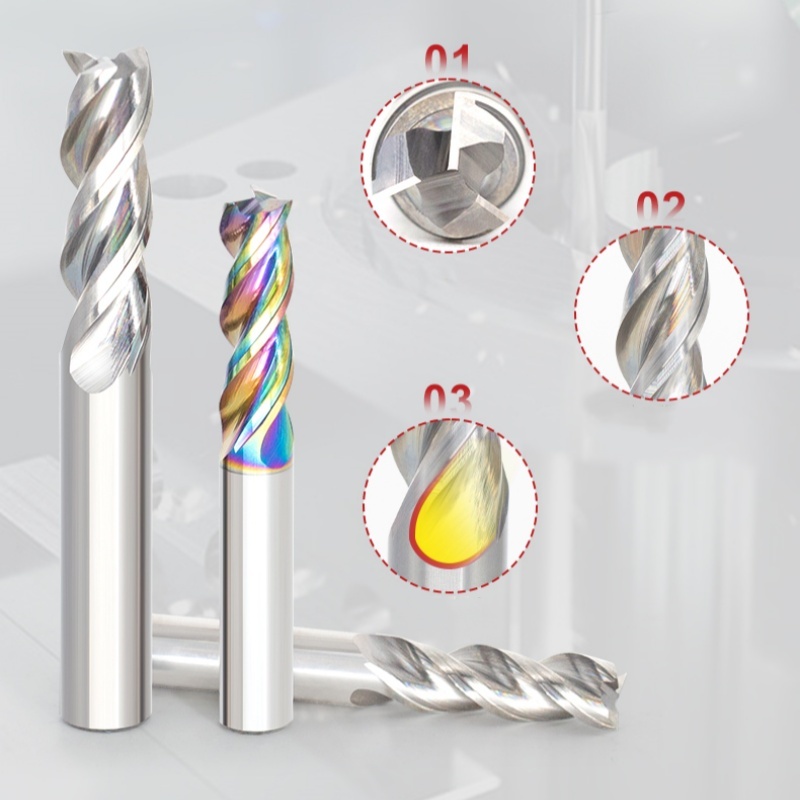
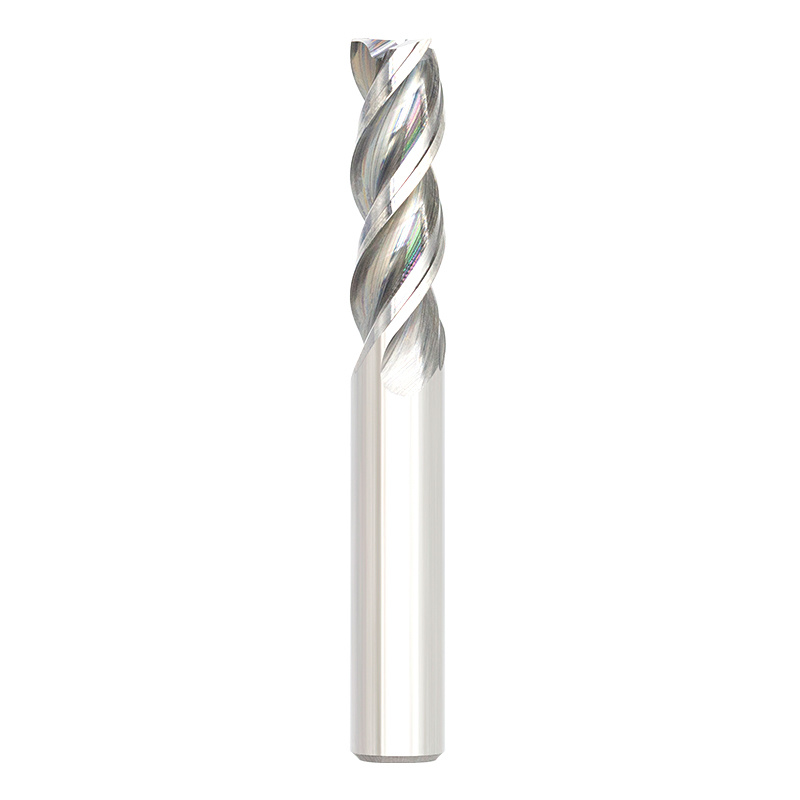
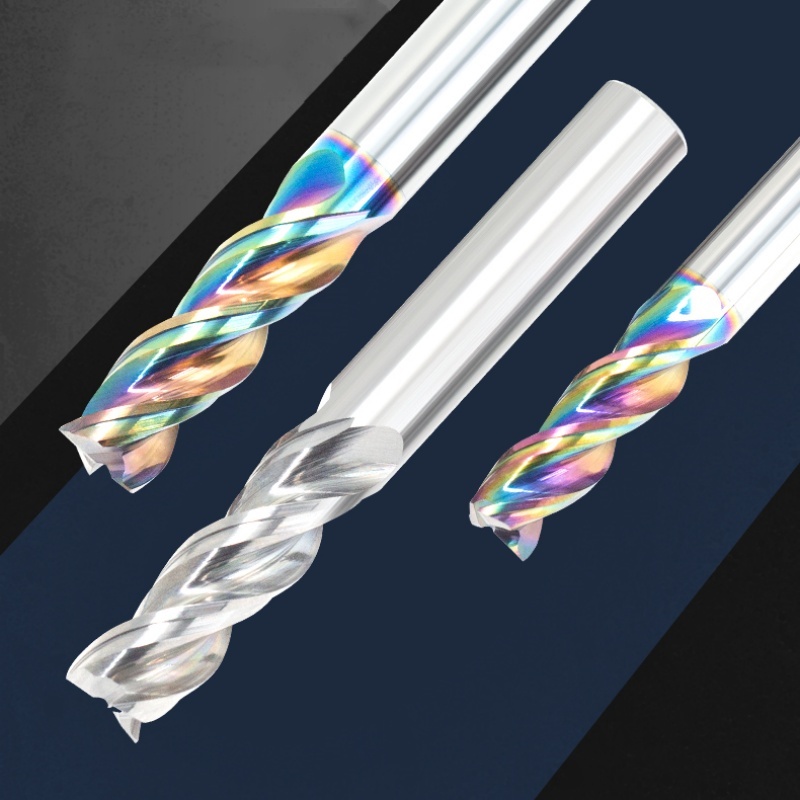
Why Choose a 3-Flute Flat End Mill for Aluminum?
Unlike steel machining, aluminum machining requires specialized tool geometry. The 3-flute flat end mill strikes the perfect balance between chip evacuation, rigidity, and cutting efficiency.
1. Optimized Flute Design
Three flutes provide more cutting edges than a 2-flute end mill, which increases feed rates.
Compared to a 4-flute tool, the 3-flute version leaves more space in the flute valley, improving chip evacuation and reducing clogging – a common problem with gummy aluminum.
2. High-Speed Machining Capability
Designed for CNC milling at very high spindle speeds (15,000–40,000 RPM).
Enables aggressive material removal without compromising surface finish.
3. Flat End Geometry
Creates sharp edges and perfect 90° walls and slots.
Ensures flat-bottom profiles for pocket milling, facing, and contouring in aluminum parts.
4. Superior Chip Evacuation
Wider flute spacing reduces chip re-cutting, minimizing tool wear.
Smooth flute polishing prevents chip adhesion to the cutting edge.
5. Coating Options
Uncoated carbide: Suitable for high-purity aluminum alloys.
ZrN (Zirconium Nitride) or DLC coatings: Reduce built-up edge and improve lubricity.
Application Scenarios
The Carbide 3-Flute Flat End Mill for Aluminum is versatile and widely used in industries requiring precision machining of aluminum alloys:
Aerospace Industry
Milling structural aluminum components such as frames, ribs, and skin panels.
High-speed contouring and pocketing operations.
Automotive Industry
Engine components, housings, and prototype molds.
Aluminum wheels, brackets, and gearbox housings.
Electronics and Semiconductors
Milling lightweight aluminum casings for laptops, smartphones, and electronic enclosures.
General Manufacturing
High-volume production of aluminum fixtures, plates, and industrial components.
Mold and Die Industry
Aluminum injection molds and prototype tooling.
Key Features and Benefits
1. High Material Removal Rate (MRR)
Achieve aggressive feed rates without chatter.
Suitable for both roughing and finishing operations.
2. Smooth Surface Finish
Eliminates burrs and reduces polishing time.
Ideal for applications demanding mirror-like finishes on aluminum parts.
3. Reduced Built-Up Edge (BUE)
Special flute geometry prevents aluminum from welding onto the cutting edge.
Coatings further reduce adhesion.
4. Extended Tool Life
High-quality carbide substrate withstands wear and deformation.
Reduces downtime and tooling costs.
5. Versatility in Cutting Strategies
Works for slotting, side milling, pocketing, and ramping.
Effective in both conventional machining and high-speed CNC applications.
Technical Considerations and Best Practices
To maximize the performance of carbide 3-flute end mills for aluminum, machinists should consider the following:
Cutting Speed & Feed Rate
Aluminum allows very high cutting speeds (300–1000 SFM).
Use higher feed per tooth compared to steel machining.
Coolant Application
Flood coolant or mist lubrication is recommended.
Reduces heat buildup and prevents aluminum welding on cutting edges.
Tool Holding
Use high-precision tool holders (hydraulic chucks, shrink-fit) for stability.
Reduces runout, ensuring dimensional accuracy.
Workholding
Secure aluminum workpieces firmly, as lightweight material can vibrate under aggressive cutting conditions.
Avoid Overloading
Proper step-over and depth of cut prevent tool breakage.
Recommended DOC: 0.5–1.5 times tool diameter depending on rigidity.
Technical Innovations & Patents
Our Carbide 3-Flute Flat End Mill for Aluminum integrates proprietary advancements:
Nano-grain carbide substrate for enhanced toughness and edge sharpness.
Mirror-polished flutes that reduce friction and improve chip evacuation.
ZrN & DLC coatings specifically tailored for aluminum, resisting built-up edge formation.
Optimized helix angle (35°–45°) to balance cutting force and chip clearance.
Optional through-tool coolant holes for high-speed machining centers.
These innovations not only improve productivity but also extend the cutting tool’s lifespan, making it a cost-effective solution for manufacturers.
Safety and Usage Precautions
Always inspect tools before use for cracks or wear
Ensure proper tool clamping to avoid vibarations
Follow recommended cutting parameteders to prevent premature failure
Use protective gear(gloves,goggles) when handling carbide tools.
Dispose of worn-out carbide tools properly , as they can often be recycled
Why Choose Our Company’s Carbide Tools?
As a professional carbide tool manufacturer, we specialize in designing, producing, and supplying precision cutting tools for global industries. Our competitive advantages include:
High-quality raw materials: Ultra-fine carbide powders and advanced sintering technology.
Customized solutions: Tailored flute geometry and coatings for specific applications.
Strict quality control: ISO-certified production with advanced inspection equipment.
Global reach: Supplying aerospace, automotive, and mold industries worldwide.
Conclusion
The Carbide 3-Flute Flat End Mill for Aluminum is a vital tool for manufacturers who demand speed, precision, and cost efficiency in aluminum machining. With its optimized design, superior carbide substrate, advanced coatings, and innovative technology, this end mill ensures excellent performance across diverse applications.
By choosing our carbide tools, customers benefit from longer tool life, reduced cycle times, and superior part quality, ultimately driving productivity and profitability in competitive industries.
Previous page
Next page
Use equipment
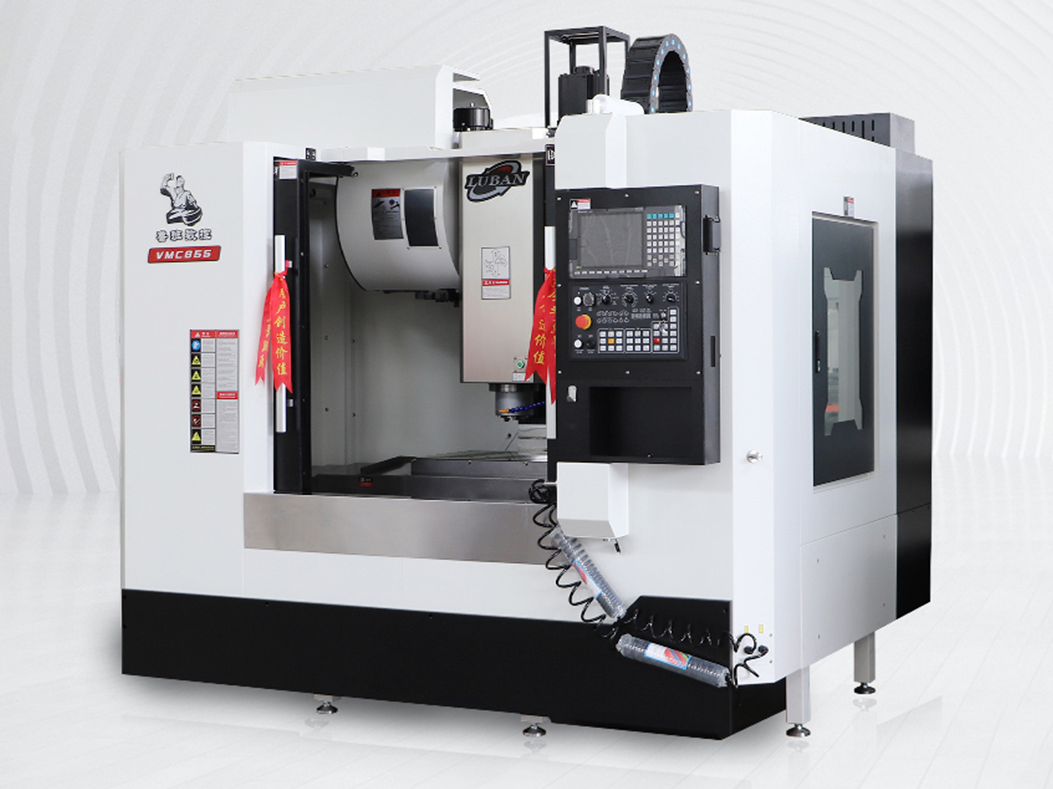
CNC machining centre
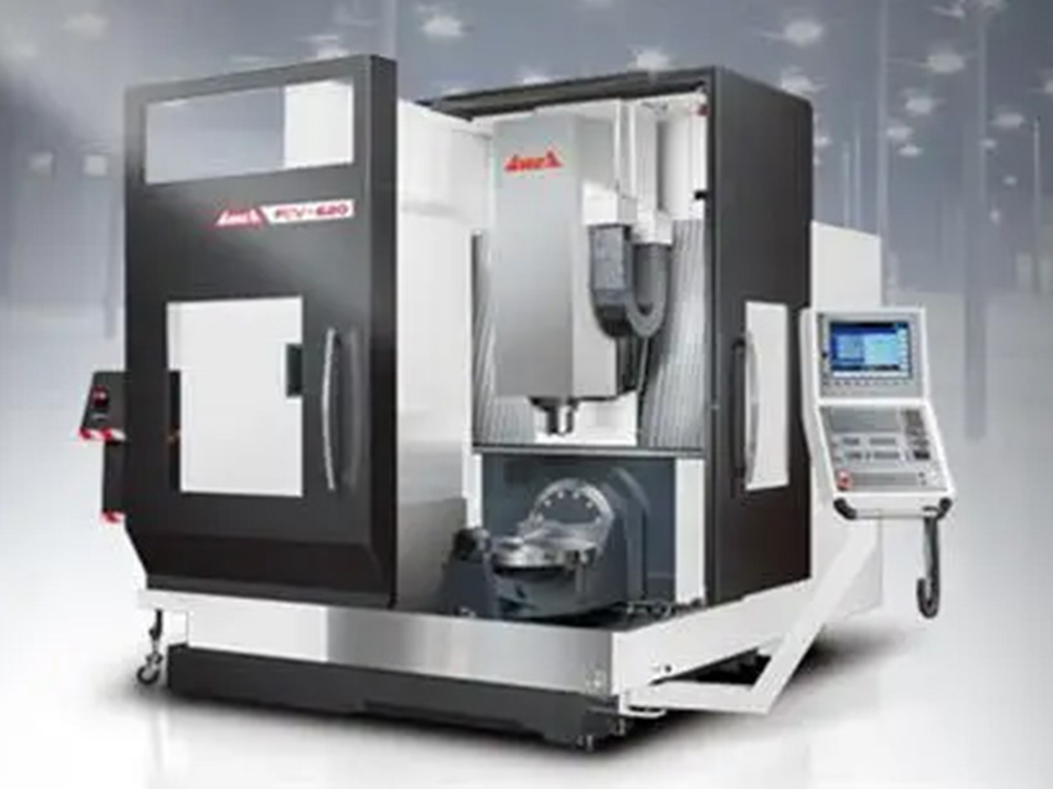
CNC machine tools
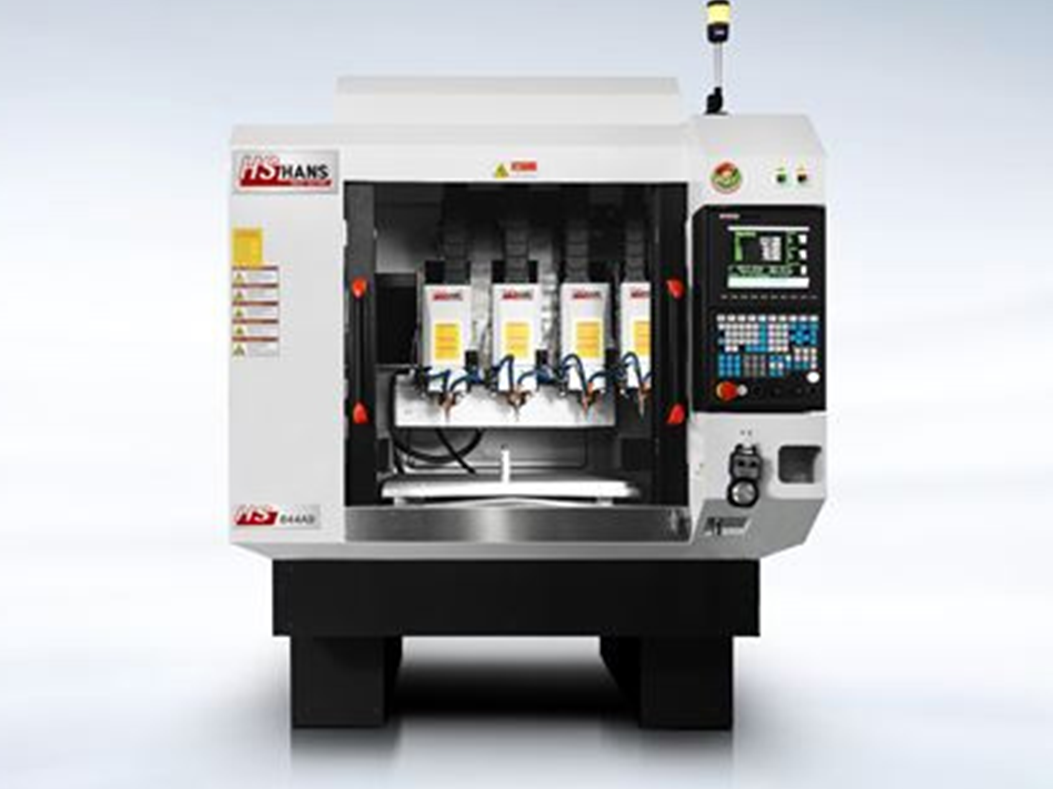
Carved machine
Factory Board
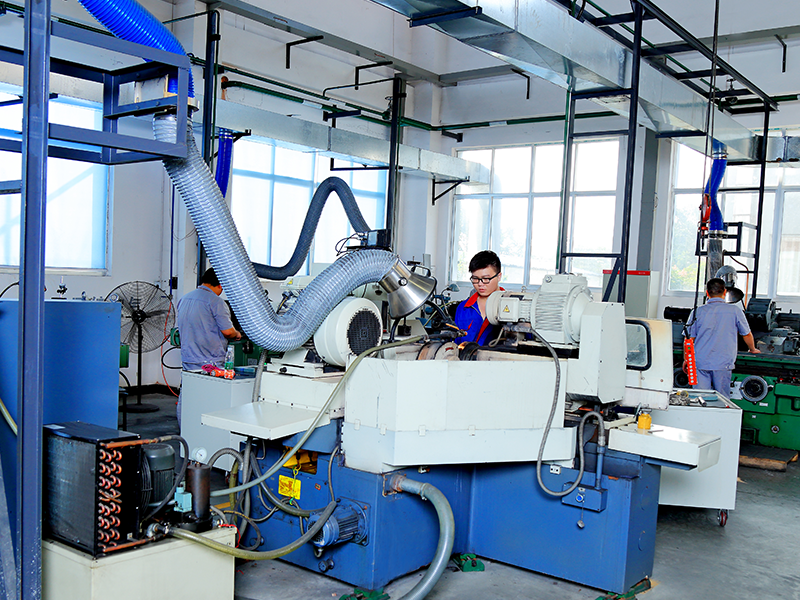
Factory Board

Factory Board
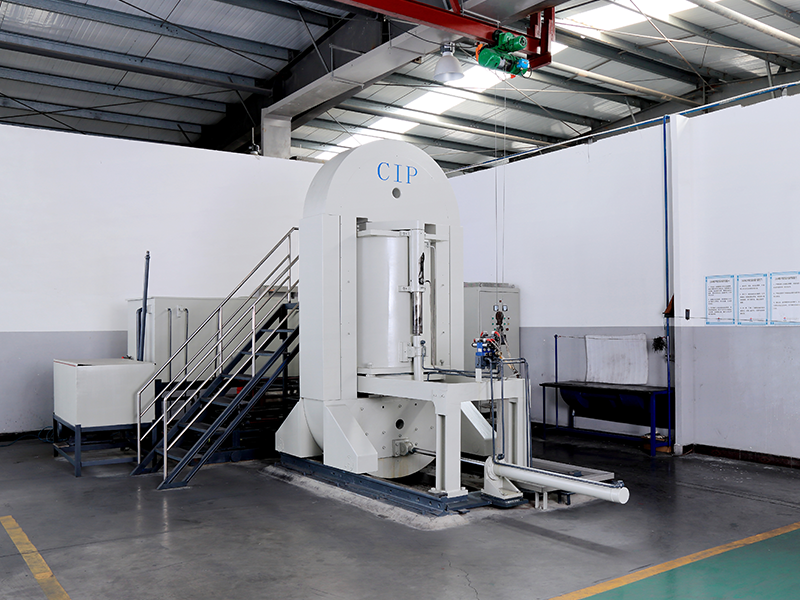
Factory Board
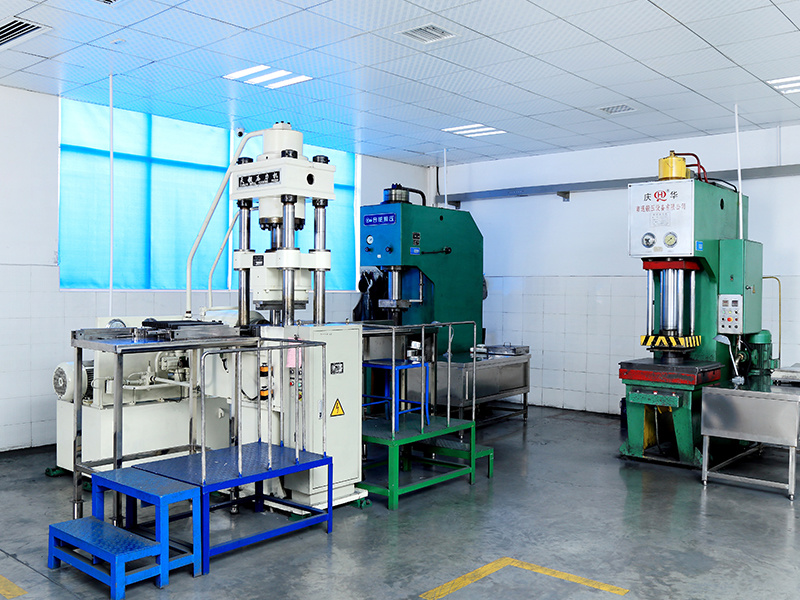
Factory Board
Recommended products


FAQ
2026-04-21
Common Issues in Machining Stainless Steel with Lizhou Turning Inserts
A detailed guide to LIZHOU cemented carbide turning inserts, covering naming conventions, types, selection of inserts specifically designed for roughing and finishing stainless steel, the differences between internal-bore and external-diameter inserts, and answers to frequently asked questions.
2026-04-21
Differences and Applications of Cobalt Drill Bits vs. Carbide Drill Bits
LiZhou Cemented Carbide provides a detailed comparison of cobalt-tipped drills and cemented carbide drills, covering material composition, hardness, tool life, suitable workpiece materials, and common issues to help you quickly select the right tool.
2026-03-31
What is the melting point of tungsten carbide? – Lizhou Cemented Carbide
This comprehensive analysis of Lizhou Cemented Carbide covers the melting point of tungsten carbide (2,870°C), a performance comparison, and industrial applications, explaining in detail why its high melting point makes cemented carbide highly resistant to high temperatures, wear, and deformation—making it ideally suited for tools, mining, steelmaking, and other demanding applications.
2026-03-28
How to Choose Positive and Negative Turning Inserts | LiZhou ISO Turning Tool Code Analysis
A Must-Read for Beginners! Lizhou Cemented Carbide Shows You How to Decode ISO Codes for Turning Inserts, Distinguish Between Positive- and Negative-Rake Inserts, Master the Three Key Selection Principles, and Resolve Common Issues Such as Poor Finish in Precision Turning and Work-Hardening When Machining Stainless Steel.
Hotline:
IPV4 / IPV6