


Blog
FAQ
Lizhou Solid Carbide End Mill Series | GX GG BS TS AL Milling Solutions
time:
2025-12-12 11:59
source:
Lizhou


Lizhou Carbide solid end mill These are commonly used cutting tools designed for workshops equipped with machining centers, gantry machines, and milling machines. Whether it’s roughing steel parts, finishing stainless steel, shaping molds, or high-speed milling aluminum components, you can’t do without a few reliable and durable end mills. That’s why we’ve made these end mills... GX 、 GG 、 BS 、 TS 、 AL Five series—so you can instantly tell which knife to use for different materials.

1. How do you use a vertical milling cutter? Start by categorizing them into “series” based on the material.
Lizhou has categorized common workpiece materials and correspondingly developed five distinct vertical milling cutter series:
GX Series: Suitable for HRC55 The following alloy steels, pre-hardened steels, and cast irons are commonly used for machining steel parts.
GG Series: HRC65 The following hardened steels and die steels ensure more stable hard milling;
BS Series: Designed for austenitic stainless steels and high-temperature alloys, featuring anti-stick properties and lighter cutting performance;
TS Series: Specializing in difficult-to-machine materials such as titanium alloys and high-temperature alloys;
AL Series: Large-chip-removal, light-cutting end mills for high-speed machining of aluminum alloys.
In a nutshell: Whether it’s steel, stainless steel, hardened steel, aluminum alloy, or titanium alloy, there’s always one that’s just right for the job.

2. The three blade types—flat tip, round nose, and ball tip—are all well-suited for both roughing and finishing operations.
Lizhou end mills focus on three main blade types, creating a complete process chain from roughing to finishing:
Flat-end milling cutter: Most versatile—suitable for roughing, side milling, and slot milling.
Round-nose end mill ( R Knife: Suitable for steps, transition areas, and mold corners; resistant to chipping and featuring a superior surface finish.
Ball-end milling cutter: Used for finishing cavities, curved surfaces, and molds, producing continuous and smooth surfaces.
For rough machining, don't worry about using large cutting depths; for finish machining, focus on achieving a good surface finish. This allocation strategy saves both刀具 and peace of mind.
3. Different numbers of blades result in different cutting sensations.
The number of blades directly affects chip removal and stability; therefore, Lizhou end mills offer a variety of configurations:
2 Blade: Large chip evacuation space, suitable for high-speed cutting of aluminum alloys and non-ferrous metals;
3 Blade: Balances chip removal and rigidity; commonly used for stainless steel and ordinary steel parts.
4 Blade: It has good rigidity and strong stability, making it more suitable for contour milling of steel parts.
Multi-edge customization: Suitable for specific processes such as high-speed machining with shallow cutting depths and precision mold finishing.
You select cutting tools based on material, process step, and machine tool power; naturally, end mills perform with great stability.

4. Only with a solid matrix and process can tool life be reliably maintained.
After trying Lizhou end mills, many customers have given consistent feedback:
“Lifespan is stable; doesn't pick parameters.”
This stems from several key points:
Ultrafine-grain cemented carbide matrix: more balanced strength and wear resistance;
Isostatic pressing: The material density is more uniform, and the cutting tool is less likely to chip.
Comprehensive quality control throughout the entire process: We personally oversee every step—from billet preparation and sintering to precision grinding of the blade edges.
Coating for different operating conditions: steel parts, cast iron, stainless steel, hardened steel, and aluminum alloys—each requiring a distinct coating process.
Therefore, under your own working conditions, a LiZhou end mill is great. roughly It’s easy to calculate how many items or meters you can handle.
5. From the workshop's perspective, whether a vertical milling cutter is good or not depends on these few points.
When selecting cutting tools for the workshop, don’t pay attention to fancy, high-flown adjectives—focus on the actual results instead.
No parameter tuning required: Just use the recommended values—no need to push parameters to their limits!
Easy to control the surface: Stainless steel doesn't feel stuffy, aluminum parts don't stick to the blade, and steel parts leave shallow knife marks.
Small dimensional variation: From the new condition of the tool to the end of its life, dimensions remain stable and do not fluctuate wildly.
Batch consistency: If this batch can run so many, the next batch will be roughly the same.
The tool system is easy to manage: different materials correspond to different series, making the tool cabinet instantly clear at a glance.
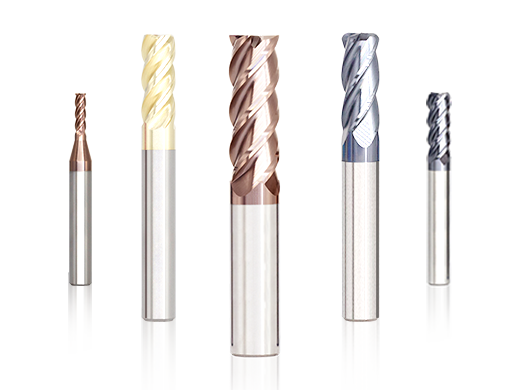
6. Choose simple cutting tools, ensuring that each material has a corresponding tool.
The entire lineup of Lizhou end mills has been developed precisely to eliminate the need for guesswork when selecting tools.
For steel parts GX
For hardened steel GG
For stainless steel BS
For titanium alloys and high-temperature alloys TS
For high-speed machining of aluminum alloys AL
Paired with flat-head, round-nose, and ball-end cutters—plus options for varying numbers of cutting edges and customized services—your machining center can be equipped with the right tool whether you’re handling single parts, small batches, or long-term mass production.
If you’re willing to provide LIZHOU customer service with the current model of your end mill, the material you’re machining, and the tool life, we can compare it against your specific machining conditions. GX / GG / BS / TS / AL Provide a more suitable tool combination to ensure smooth machining, aesthetically pleasing surfaces, and more stable tool life.
Recommended products


Hotline:
IPV4 / IPV6