


Blog
FAQ
Lizhou Cutting Grooving Blades | Stable and Durable Machining Solutions from the MNMG and TD Series
time:
2025-12-12 11:25
source:
Lizhou


Lizhou Cutting grooving blade — A reliable tool designed for stable machining
In actual turning production, cutting off and grooving are often not the operations that take the longest processing time, yet they are the steps most prone to problems.
Chipped blades, broken knives, poor chip evacuation, unstable dimensions... Any minor issue can render the entire product scrap.
Especially when working with materials such as stainless steel and high-temperature alloys, this type of machining process puts even greater demands on the blade’s overall performance.
Lizhou Cemented Carbide has been deeply engaged in this field for a long time. By incorporating feedback from the production site, we continuously optimize our cutting and grooving blades, enabling users to achieve the most stable machining experience possible under various material and machine tool conditions.
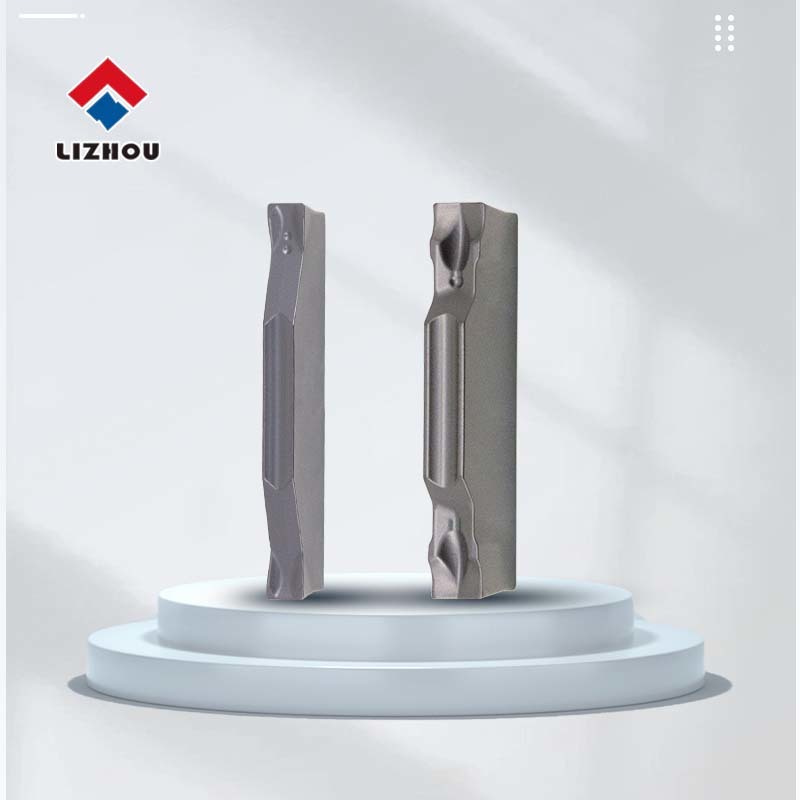
1. High-quality cemented carbide substrate for enhanced impact resistance at the cutting edge.
The most significant feature of cut grooves is that the stress is highly concentrated and the cutting edge bears a large pressure; therefore, the substrate material is even more critical than the overall shape.
Lizhou uses a self-developed, high-performance tungsten steel material that features uniform sintering, excellent toughness, and high hardness, enabling the blade tip to withstand instantaneous impacts with ease.
The advantages of this type of material are reflected in:
It's not easy to have "a corner chipped off the blade" when cutting.
Even with a relatively deep groove, the cutting edge can still remain intact.
Long-term machining is less likely to cause abnormal wear.
For machining mold manufacturers with faster production rhythms, stable blade life can effectively reduce downtime.
II. MNMG and TD Two major series, suitable for different processing needs.
MNMG Series: Strong structure, stable cutting.
Suitable for materials such as steel and cast iron, this tool features high rigidity and stable blades, making it ideal for conventional cutting and grooving operations.
TD Series: Chip removal is smooth and particularly suitable for tough materials such as stainless steel.
When machining stainless steel and high-temperature alloys, the biggest concerns are tool sticking and chip entanglement. TD The series’ groove design effectively removes chips, reducing the occurrence of situations where “the blade gets stuck and then breaks.”
For different materials and different machine tool rigidities, you can always find a corresponding blade solution.

3. Groove designs tailored for different machining conditions, more closely reflecting actual machining practices.
Although the surfaces of cutting and grooving appear simple to process, they place extremely high demands on the blade groove geometry during machining.
The groove design of Lizhou blades focuses on:
The blade tip experiences more uniform force.
Lighter cutting resistance
The chip removal direction is clearer.
Not easily clogged or jammed.
The workpiece section is smoother after cutting.
A good groove design can make the machine tool’s load smoother, making it particularly suitable for automated production lines with faster feed rates.
4. Wear-resistant coating to enhance blade life and thread quality.
The coating has a significant impact on cutting blades. Lizhou uses a composite coating that is both high-temperature resistant and features a low coefficient of friction, giving the blades:
Not easily sticky.
The blade tip temperature decreases, slowing down wear.
The cut surface is cleaner.
Easier to process stainless steel.
Especially in high-temperature alloys, 304、316 The gap is even more evident when looking at the materials.
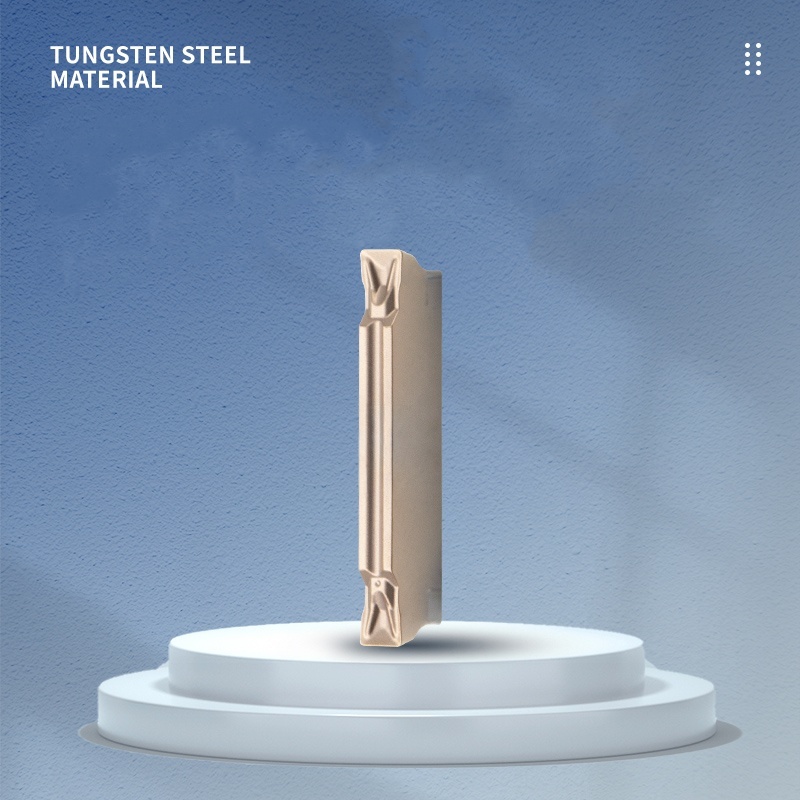
5. Stable processing performance, reducing rework and downtime.
What users really care about when it comes to cutting grooving blades is: Is the blade prone to breaking? Is the workpiece’s cross-section smooth? Is the bottom of the groove flat?
Is the machine tool triggering an alarm due to poor chip removal?
Can the blade last until the end of the machining batch?
Lizhou has conducted extensive verification in these areas, with only one goal in mind: to make the machining process as stable as possible, so that users don’t have to keep staring at the machine tool all the time.
6. Wide range of applicable materials—no need to stock up on too much inventory.
Lizhou cutting grooving blades are suitable for:
Steel parts
Cast iron
Stainless steel
Copper aluminum
High-hardness steel
Titanium alloy
High-temperature alloy
For factories that need to process multiple materials, this is a real advantage.
Recommended products



Hotline:
IPV4 / IPV6