


Blog
FAQ
LBC12 / LBC12S Carbide Round Bars—Stainless Steel Machining Base Material
time:
2026-01-09 14:13
source:
Lizhou


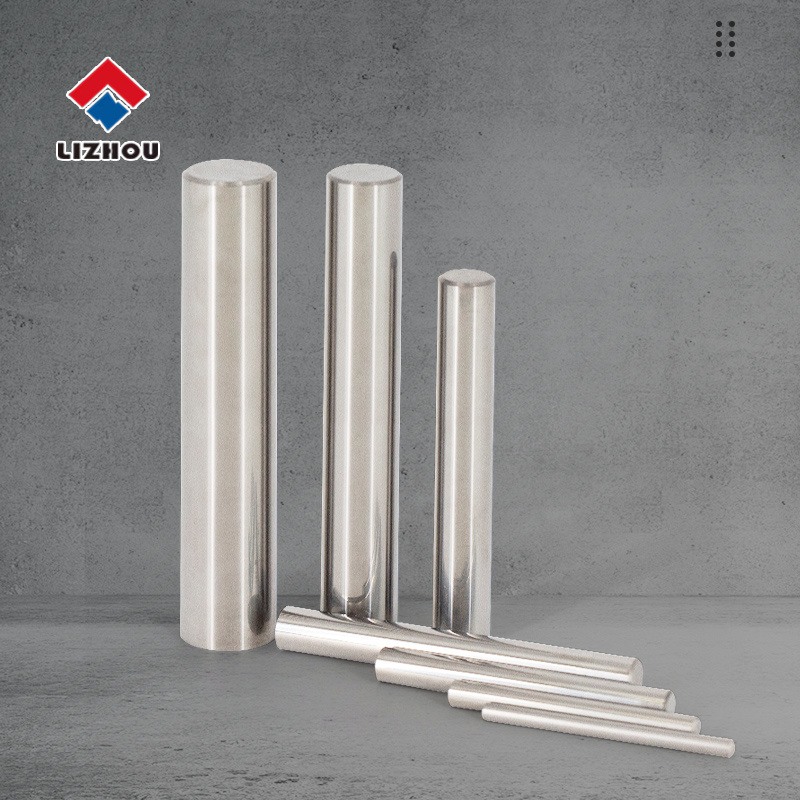
Lizhou LBC12 and LBC12S Solid carbide round bar There are both rough-ground bars and precision-ground bars, both of which serve as a stable starting point for stainless steel cutting tools. Engineers who have experience working with stainless steel know all too well that unstable tool life is the norm in the machining industry.
After a cutting tool is manufactured, it experiences significant cutting resistance and concentrated heat generation. Once the machining conditions fluctuate, the tool’s performance begins to decline. Sometimes, replacing the cutting edge or adjusting process parameters can provide some relief—but in many cases, the problem isn’t how we’re cutting, but rather what the tool is made of. The condition of the carbide substrate often determines the lower limit of a tool’s performance.
If the original internal structure of the cemented carbide isn't sufficiently uniform, no matter how beautifully the cutting edge is ground, it will still be difficult to maintain stable performance during actual cutting.
Based on this practical need, Lizhou has gradually developed, through long-term application, two round bar grades that are more suitable for processing stainless steel materials— LBC12 and LBC12S They’re not pursuing extreme performance; rather, their goal is to make cutting tools more controllable.

LBC12 The round rod is more balanced.
LBC12 The processing objectives are more clearly defined—without placing excessive emphasis on any single metric. For round bars, a relatively balanced performance is maintained between wear resistance and toughness, a point that becomes particularly evident when machining hard steels.
Use LBC Using carbide round bars as tools, the cutting edges won't be too brittle and are less prone to abnormal wear. This means you won't have to replace blades frequently. When machining conditions are relatively stable, tool life will significantly increase, thereby reducing tool purchase costs.
For companies that process stainless steel and hardened steel, LBC12 The raw material is more like a solid carbide round bar that boasts a robust foundation and is versatile across various operating conditions.
LBC12 and LBC12S The differences:
LBC12S The center of the round bar also offers certain advantages in terms of toughness and impact resistance, as well as wear resistance—particularly when dealing with the fluctuating operating conditions commonly encountered in stainless steel machining.
In the actual cutting process, LBC12S Tolerance for changes in cutting force and thermal shock is higher. LBC12 Higher cutting speeds mean that the tool is less likely to experience chipping or edge breakage in the early stages, significantly extending its overall service life. This applies not only to stainless steel but also to hard steels and titanium alloys. The benefits are particularly pronounced in applications with high stability requirements.

How can we stand out in a stable process?
Whether it is LBC12 Still LBC12S In terms of material selection and production processes, we impose stringent quality-control standards on our cutting tools to ensure their “stability.” Our formulations aren't designed to be overly complex; rather, they’re crafted to achieve more uniform performance distribution. While there are indeed parameter differences among various grades, the underlying design logic remains consistent: We first make sure the materials themselves are of the highest quality, and only then do we focus on how the tools perform during machining.
LBC12 and LBC12S What process is applicable?
Both of these round rods undergo a dry-bag isostatic pressing process during the forming stage. The significance of this method lies in ensuring uniform stress distribution throughout the material and producing a cleaner internal structure. In practical applications, this translates into very direct improvements: the round rods become denser and more compact, exhibiting greater stability during grinding. Moreover, the performance differences among tools from the same batch become markedly more pronounced, making it easier to achieve consistent results during mass production.
Wide specification coverage, supports customization.
Focusing on common tool applications, LBC12 With LBC12S Multiple standard specifications are available. We also offer customization for non-standard sizes and special requirements, making it easy for users to match them according to their own product structures.
Whether it's for small-diameter tools or standard-sized applications, you can find a suitable substrate solution.
When it comes to materials, ultimately it’s all about long-term performance.
Lizhou has accumulated over 30 years of manufacturing experience in the cemented carbide field.
LBC12 and LBC12S It’s not a “new brand” launched all at once, but rather a mature choice that has been gradually refined through long-term use and continuous feedback.
What they focus on is not the extreme values listed in the parameter table, but rather whether the tool can last long, perform reliably, and provide peace of mind when machining stainless steel.
Recommended products


Hotline:
IPV4 / IPV6