


Blog
FAQ
Indexable milling cutter manufacturer
time:
2026-06-08 11:38
source:
Lizhou


In CNC machining centers, many manufacturers face challenges such as high tooling costs and frequent tool changes. In most cases, these issues stem not from machine‑tool parameters but from the failure to select the appropriate indexable milling cutter.
As the mainstream CNC Machine tool components: indexable milling cutters have become the primary cutting tools for high-volume machining, mold making, and precision machining. Today, Lizhou Hard Alloy will provide a comprehensive overview of indexable milling cutters—covering their functions, classifications, and operating principles—to help manufacturing facilities reduce consumable costs and enhance machining stability.
Content
- What is a indexable milling cutter?
- Types of Indexable Milling Cutters
- Services provided by Lizhou Factory
- The working principle of indexable milling cutters
- Common Issues with Indexable Milling Cutters

I. What is a Indexable Milling Cutter?
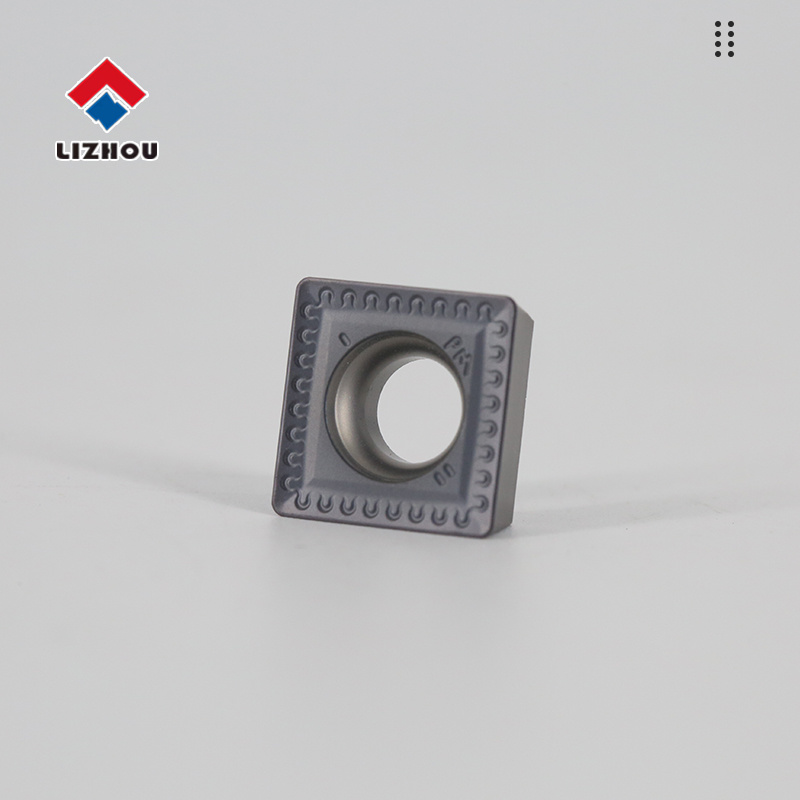
Indexable milling cutters consist of a milling cutter body. + A modular milling cutter composed of replaceable carbide cutting inserts, with blade accessories for machining centers; unlike solid‑body mills, it eliminates the need to replace the entire tool.
Indexable milling cutters support a variety of machining methods, including dry and wet operations, and are compatible with processes such as high‑feed milling, heavy‑feed milling, and high‑speed machining. They can perform complex operations on flat surfaces, end faces, side walls, grooves, and curved surfaces, and are widely used for cutting materials like steel, stainless steel, aluminum alloys, and cast iron.
II. Types of Indexable Milling Cutters and Their Machining Applications
Based on machining processes and applications, indexable milling cutters can handle the entire range of operations—roughing, semi‑finishing, and finishing—and are available with specialized insert types tailored to different working conditions, fully meeting the diverse production needs of manufacturing facilities.
1. Roughing milling cutter
Primarily used for heavy‑duty milling operations involving large stock removal and roughing, it features ample tool‑space, smooth chip evacuation, and excellent impact resistance, making it ideal for rough milling of materials such as carbon steel and cast iron, thereby significantly enhancing roughing efficiency.
2. Semi-finish milling cutter
Balancing efficiency and precision, it is well-suited for shoulder milling, contour milling of side walls, and curved-surface contour machining, making it the most commonly used tool type in mold manufacturing and structural component machining.
3. Finishing Milling Cutter
Primarily delivering high‑precision mirror finishes, with sharp blade edges and tight dimensional tolerances, it is used for finishing part surfaces and mating interfaces, addressing issues such as excessive burrs and poor surface finish.
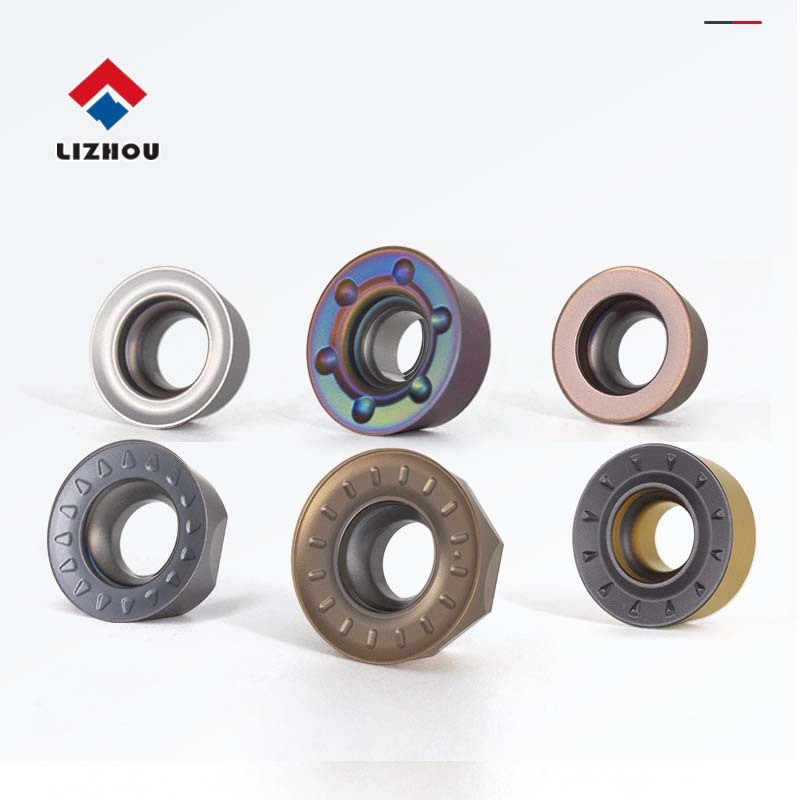
In terms of material compatibility, options include steel‑grade blades for steel machining, stainless‑steel blades, aluminum‑specific blades, and cast‑iron‑dedicated blades, each designed to address challenges such as material adhesion, rapid wear, and chipping. Coatings are available upon request. PVC Coating, CVD Coating, aluminum‑compatible coating, suitable for diverse operating conditions ranging from light‑load precision machining to heavy‑load rough milling.

III. Services Provided by Lizhou Factory
As a professional manufacturer and original‑equipment factory, Lizhou Cemented Carbide specializes in the production of indexable milling cutters and CNC inserts, offering support… B2B Procurement and foreign trade wholesale—providing suppliers and distributors with a stable supply of goods.
Our Services:
- Support OEM\ODM Customization
- Supports custom mold design and drawing services for blade molds.
- Strict quality inspection
- Source factory
- Fast delivery time
Our full range of indexable milling cutters undergoes rigorous factory‑level quality inspection, offering exceptional wear resistance, chipping resistance, and consistent tool life. They are compatible with a wide variety of machining centers and CNC milling machines, addressing issues such as unstable supply, inconsistent quality, and delayed delivery times for buyers.
IV. Operating Principle of Indexable Milling Cutters
Essentially, indexable milling cutters combine durability, versatility, and efficiency, making them a cornerstone of modern manufacturing. Today’s cutting tools, thanks to advances in materials science and machining technology, have boosted productivity while reducing costs. Next, let’s explore the operating principles of indexable milling cutters.
Working principle
- Preparation: Select the appropriate tool body and insert based on the workpiece material and the required cutting type, ensuring compatibility with the machine tool spindle and the overall system.
- Installation: Securely mount the cutting tool onto the milling machine spindle; proper alignment ensures precise operation.
- Parameter Settings: Adjust the cutting speed, feed rate, and depth of cut according to the material and tool specifications; these parameters significantly affect surface quality and tool life.
- Machining process: The milling operation is initiated, with the cutting tool rotating at high speed and the cutter removing material from the workpiece layer by layer.
- Blade Replacement: When the blade becomes dull or damaged, stop the machine, remove the worn blade, and install a new one. This quick‑change procedure minimizes downtime.
V. Common Issues with Indexable Milling Cutters
Q1 Why do indexable milling cutters wear out so quickly?
A: In most cases, it’s due to an incompatibility between the blade material and coating and the workpiece—using an aluminum‑compatible blade on steel or a standard blade on hard materials.
Q2 What should I do if the cutting edge is prone to chipping during rough machining?
Answer: For heavy-load rough machining, it is recommended to select thickened solid tools with strong impact resistance; prioritize the use of… CVD Coated blade
Q3 : Can’t achieve a mirror finish on the finished surface?
Answer: For finish machining, precision grinding is selected and paired with… PVD The coated, sharp cutting edge reduces the feed rate, enabling high-precision, smooth-surface machining.
Q4 : Can we place bulk orders and request OEM customization?
A: As a source manufacturer, Lizhou supports bulk supply of indexable milling cutters in all specifications.
Overall, selecting the right indexable milling cutter not only enables efficient high-speed machining and rapid-feed milling across a wide range of applications, but also significantly boosts productivity, extends tool life, and reduces shop‑floor consumables costs—making it a key choice for enhancing cost efficiency in CNC machining.
previous page
Recommended products


Hotline:
IPV4 / IPV6