


Blog
FAQ
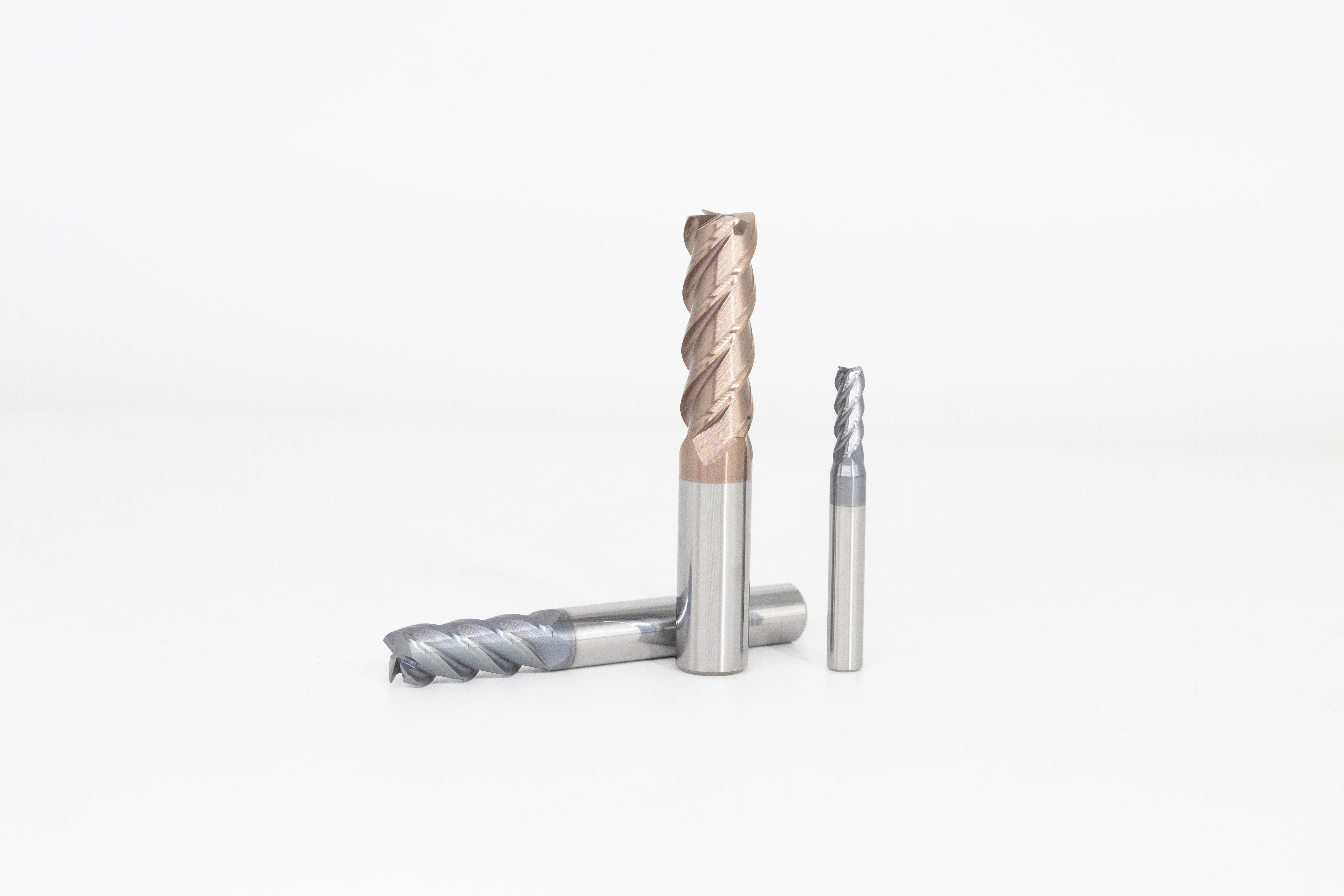
Tungsten steel BS series end mills for machining stainless steel materials
time:
2025-12-04 11:50
source:
Lizhou


Processing stainless steel—especially austenitic stainless steels and high-temperature alloys—has long been regarded by the industry as a "tough nut to crack."
The material itself has high toughness but poor thermal conductivity and tends to stick to the cutting tool very easily. Its processing temperature rises rapidly, not only causing the workpiece surface to become rough and fuzzy, but also leading to extremely rapid tool wear. With even a slight lapse in attention, issues such as chipping, deep tool marks, and uneven grayish-shiny surfaces can easily arise—problems that repeatedly plague many machining workshops.
If you often find yourself troubled by stainless steel machining, then Lizhou has launched... BS Series Tungsten Steel End mill It will be a delightful and surprising choice.
1. High-performance tool structure specifically designed for stainless steel materials
BS The series features a super-fine-grain, high-toughness cemented carbide matrix developed in-house by Lizhou, which enhances the tool’s impact resistance and wear resistance from the source. When machining difficult-to-cut materials, these tools exhibit superior wear resistance and chipping resistance, ensuring stable and reliable tool life.
Suitable for processing:
Austenitic stainless steel ( 304、316、 316L Wait)
Superalloy ( Inconel 、 Hastelloy Wait)
Heat-resistant steel and difficult-to-cut steel grades
For companies that need to process stainless steel structural components, food machinery parts, medical components, and high-temperature alloy parts over the long term, this technology can significantly enhance both processing efficiency and product quality.
II. Dual-structure option: You U Groove / Universal groove, suitable for various machining conditions.
BS The series offers two groove types:
✔ Four-blade flat head You U Slot type: Enhanced chip removal capability
Suitable for: Deep cavity machining, long-distance continuous cutting, side milling and slotting, and heavy-duty cutting.
You U The groove design allows chips to be smoothly discharged, preventing heat buildup, tool sticking, and chipping caused by chip accumulation, thereby significantly enhancing machining continuity.
✔ Four-blade, flat-head, standard groove: More versatile and stable
Suitable for: Light-load toolpaths, semi-finishing, and high-precision contour machining
The two groove types meet the needs of different machine tools and different machining strategies, making the selection more flexible.
3. Sharp Blade Design—Stainless steel processing is smoother and faster, with no sticking to the blade.
The biggest problem with stainless steel is "sticking to the knife." BS The series has redesigned the blade sharpness:
Cutting is smooth and effortless, with no dragging of the blade.
Reduce built-up edge formation
The workpiece surface is cleaner and smoother.
The tool generates less heat, effectively alleviating the issue of rising cutting temperatures.
The finished surface is smoother, reducing the time required for subsequent polishing and grinding.
4. Unequal-flute design—reduces vibration and improves machining quality
Stainless steel has high toughness; once vibration occurs, it can lead to deep knife marks, dimensional instability, and even chipping of the blade.
BS The series’ unequal blade structure can:
Break the resonant frequency
Significantly reduce cutting vibration
The cutting path is more stable.
Better dimensional accuracy
The tool life is more durable.
The advantages are even more pronounced when machining thin-walled parts, deep-cavity parts, and parts with complex shapes.

5. Innovative coatings for more stable cutting and longer tool life.
The coating is one of the key factors determining tool life.
BS The series features a new high-temperature-resistant coating, with the following characteristics:
Strong antioxidant capacity
Low coefficient of friction
Higher hardness at high temperatures
The tool surface is more wear-resistant.
Stainless steel machining is more stable and prevents blade chipping.
With the added coating, this series of cutting tools consistently maintains excellent sharpness and cutting performance when machining stainless steel and high-temperature alloys.
6. Support non-standard customization to meet diverse processing needs.
Lizhou can customize solutions based on the actual needs of the workpiece:
Special blade length / Knife handle length
Special groove type
Extended-neck knife for enhanced stability
Special-angle cutting edge
Special coating
OEM/ODM Bulk customization
Whether it's complex cavities, precise contours, or high-difficulty materials, we can develop tooling solutions that are better suited to the task.
7. Why choose Lizhou? BS Series?
From the perspective of the processor, it has:
Stainless steel is not easily sticky to knives.
The tool is sharp enough for smooth and effortless cutting.
Chip removal is smooth and doesn't clog the blade.
The tool temperature is lower, making it less likely to burn the blade.
Stable work, fine blade patterns.
Long service life, reducing the number of tool changes.
More reliable for difficult-to-machine materials
It’s a cutting tool that can truly address the challenge of “difficult machining of stainless steel.”
Recommended products


Hotline:
IPV4 / IPV6